DENTAL IMPLANTS
Advanced implant solutions
Expert care. Lasting results.
Designed for your smile.
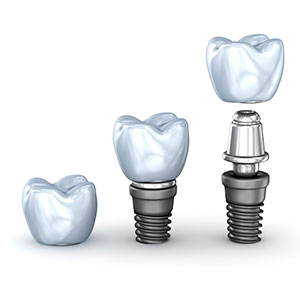
Opting for dental crowns to correct mild tooth protrusion is a frequent consideration for those seeking rapid smile enhancement. This article examines when crowns are a viable option and when orthodontic treatment remains the more optimal path.
Mild tooth protrusion occurs when the upper front teeth project further forward than normal, though not to a severe degree. While chewing function often remains perfectly intact, the side profile can lack natural harmony.
The extent of this protrusion varies individually, as do the underlying causes.
Common factors include:
This subtle misalignment often makes people feel self-conscious when smiling or being photographed from the side.
Selecting the right corrective approach depends on addressing the root cause rather than merely judging the visible appearance.
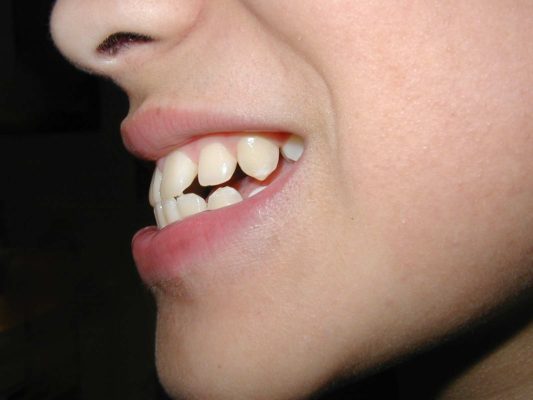
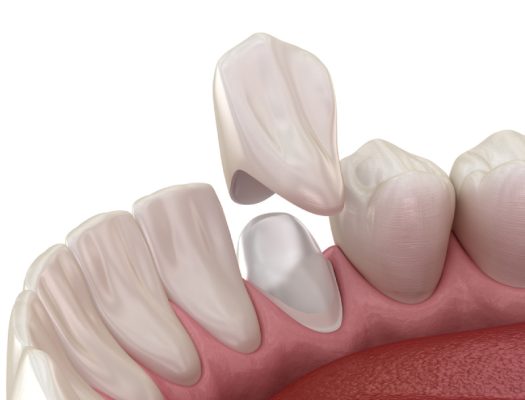
In certain cases, dental crowns can effectively address mild protrusion by adjusting the shape and inclination of the teeth.
This approach is typically suitable when the condition is independent of the jawbone structure.
Consider them under these circumstances:
Your dentist can reshape the teeth to ensure your profile harmonises with your facial features.
When clinically indicated, dental crowns deliver immediate cosmetic refinement.
Key benefits include:
However, crowns remain a targeted treatment rather than a universal remedy for all instances of protrusion.
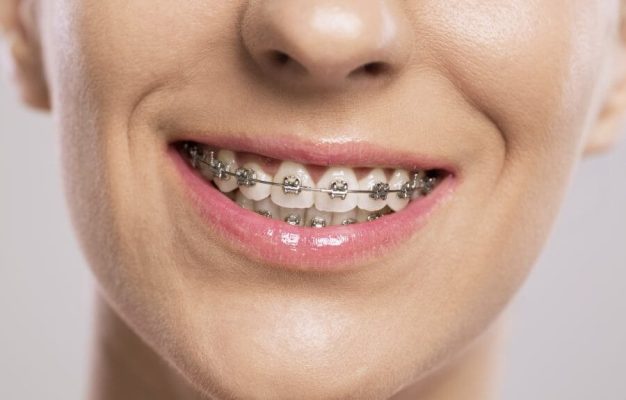
Orthodontics repositions teeth within the arch without altering their natural structure.
This non-invasive approach is ideal when protrusion stems from positional or bite misalignment.
Orthodontic care is indicated for:
By gradually adjusting tooth alignment, orthodontics ensures enduring, long-term stability.
Depending on individual aesthetic priorities and the clinical treatment plan, options include:
These methods systematically guide teeth along a controlled pathway to optimize bite function and overall aesthetics.
Selecting the ideal method depends entirely on the root cause of the protrusion and individual aesthetic goals.
Orthodontic treatment repositions your natural teeth without requiring significant alteration to the tooth structure.
Porcelain crowns require trimming a thin layer from the outer surface of the tooth to accommodate the crown.
Orthodontic treatment requires time to gradually guide teeth into alignment.
Porcelain crowns deliver aesthetic improvement in a significantly shorter timeframe.
Orthodontics corrects both tooth positioning and bite alignment.
Dental Crowns primarily address the external shape and appearance of the teeth.
Orthodontics is best suited for long-term alignment.
Porcelain crowns excel when the priority is immediate structural and aesthetic enhancement.
In many instances, dental crowns fail to address the root cause of the protrusion.
These scenarios include:

To ensure lasting stability, Worldwide Dental & Plastic Surgery Hospital prioritises bespoke treatment planning founded on:
This personalised approach delivers a seamless balance between aesthetics and oral function.
Mild tooth protrusion can be addressed through various clinical approaches, depending on the underlying cause and the extent of the misalignment.
In selected cases, dental crowns can effectively reshape the teeth to provide rapid aesthetic improvement.
However, when the condition stems from tooth positioning or bite misalignment, orthodontic treatment offers a more suitable path to ensure enduring stability.
Ultimately, a comprehensive clinical assessment is essential to selecting the right treatment plan, ensuring a naturally balanced and harmonious smile over time.